Reflection, Recognition and Renewal: My Experience at the 10th BME Early Career Researcher Conference

As part of my ongoing community engagement work and my role as an Early Career Researcher, I am always seeking opportunities to connect with researchers, practitioners, and communities committed to advancing equity, inclusion, and excellence in higher education. Attending the 10th Black and Minority Ethnic Early Career Researcher (BME ECR) Conference at King’s College London was therefore a meaningful opportunity to learn, reflect and contribute to important conversations about the future of research.
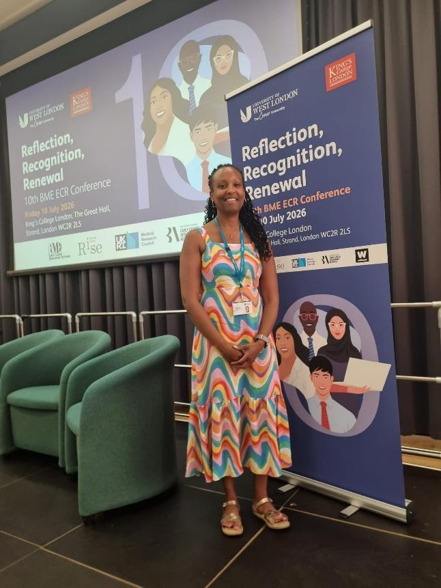
Walking into the Great Hall at King’s College London, I couldn’t help but think about what it meant to be part of something with such a rich legacy. Celebrating its 10th anniversary, the Black and Minority Ethnic Early Career Researcher (BME ECR) Conference was more than just another academic event; it was a reminder that community, representation and collective ambition matter.
The theme, “Reflection, Recognition and Renewal”, was evident throughout the day. From the opening welcome to the closing conversations, there was a shared commitment to celebrating how far Black and minority ethnic researchers have come while honestly acknowledging the work that still lies ahead.
One of the highlights was hearing from Professor Bernadine Idowu, whose vision and determination established the conference a decade ago. It was inspiring to see how an initiative created to support researchers from underrepresented backgrounds has grown into a nationally recognised space for learning, connection and advocacy.
The keynote address, by Professor Jason Arday, was particularly impactful. His reflections on navigating academia, creating opportunities for others, and challenging systems that often exclude marginalised voices resonated deeply. Rather than simply discussing barriers, he encouraged us to imagine the possibilities that emerge when Black researchers are empowered to lead, innovate, and shape the future of higher education.
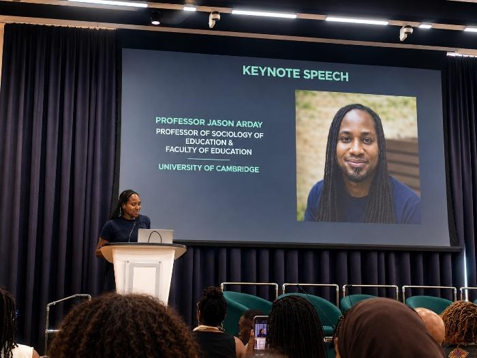
Throughout the event, it was clear how much Professor Arday's work had inspired those in attendance. Wherever he went, there was a queue of people patiently waiting for the chance to speak with him. Despite hoping to introduce myself, I never found the right moment during the conference.
As someone who would usually hesitate to approach a person of such stature, I unexpectedly found myself stepping well outside my comfort zone when I later saw Professor Arday at the tube station waiting for his train. Recognising it as a chance I might not have again, I introduced myself, thanked him for his inspiring keynote, and expressed my appreciation for the impact of his work.
We had a genuinely engaging conversation, and I found myself wishing we had more time to continue our discussion. Unfortunately, I had to leave to catch my own train, back to Manchester. As we said our goodbyes, Professor Arday gave me the warmest hug, a simple but memorable gesture that reflected the generosity and authenticity he had demonstrated throughout the day. That brief encounter became one of the most meaningful moments of the conference and reinforced the importance of stepping beyond one's comfort zone to connect with those who inspire us.
The alumni impact stories were equally inspiring. Hearing how previous attendees had progressed into leadership roles, secured research funding, and influenced policy reminded me that success is not a solitary journey. It is often built on mentorship, supportive networks and spaces like this conference that affirm our potential.

The panel discussion and vision workshop invited us to think critically about what the future of research should look like. Conversations moved beyond diversity as a buzzword and focused on creating genuinely inclusive research cultures where Black researchers can thrive without constantly having to justify their presence. It was refreshing to contribute ideas alongside colleagues who share a commitment to transforming academia for future generations.
Perhaps the greatest takeaway from the day was the value of connection. The programme was intentionally designed to encourage attendees to network throughout the event, with dedicated opportunities to engage in meaningful conversations between sessions, during breaks, and through structured networking activities. These moments created an inclusive and welcoming environment where researchers at different stages of their careers felt comfortable introducing themselves, sharing their research interests, and exploring potential collaborations. Rather than networking feeling like an afterthought, it was embedded into the fabric of the conference, reinforcing the importance of building a strong and supportive scholarly community.
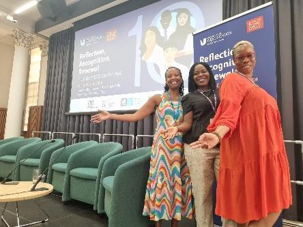
Leaving the conference, I felt renewed. Renewed in my confidence, renewed in my purpose, and renewed in my belief that Black researchers belong in every academic space not simply as participants, but as leaders, innovators and changemakers.
As someone committed to community engagement and widening participation, I left the conference with a renewed appreciation for the importance of fostering meaningful professional relationships alongside academic exchange. Beyond the dissemination of research and the sharing of expertise, the conference provided a valuable space for developing enduring networks of support, collaboration and collegiality among Black researchers. These connections have the potential to extend well beyond the event itself, creating opportunities for future partnerships, knowledge exchange and mutual development.
As the BME ECR Conference enters its next decade, I hope it continues to cultivate inclusive environments where lasting professional communities can flourish, empowering researchers to collectively contribute to a more equitable and representative academic landscape.

Author:
Lorraine Lawrence
Community Researcher (UPTURN)
Department of Health Science,
University of York